
Friday 19th to Sunday 21st April
A huge Himalayan rumble chased us down the mountain as we left Eagles Nest. The clouds grew thick, looming and lowering over us almost obscuring the natural light. This was not the tropical purple of a Caribbean storm cloud, but a greeny shade of grey reminiscent of the forests it was cloaking.
Beneath it, for the last time, we made the hair raising descent towards McLeodganj via the unmade road. How the tyres survive on the vehicles which travel on it is a mystery. We bounced up and down in silent prayer on the back seat until we reached the more populated concrete narrows of the town.
From there we slowly made our way to Norbulinka – the Tibetan Museum or Centre for traditional art and craft. It seemed a breezy haven of tranquility with its art studios, walkways and gently waving flags after the chaos outside.
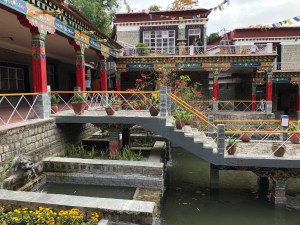
We wandered around, peeking in on the various studios where traditional crafts were being continued.
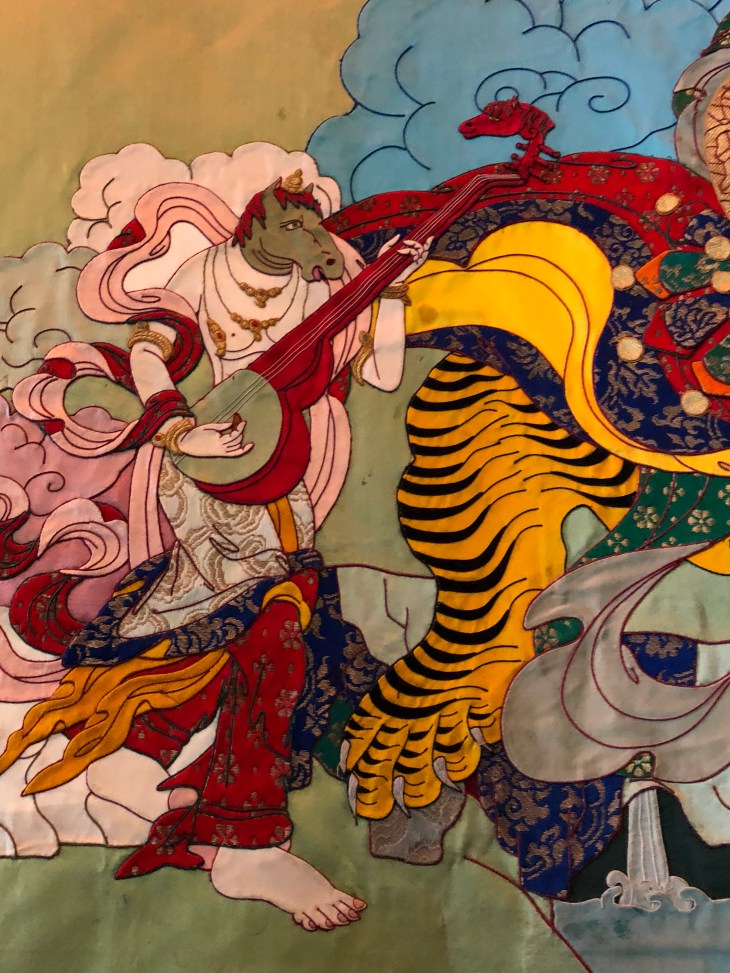
The Temple was a mass of red and gold and fabulous appliqué work on enormous cloth hangings suspended on either side of the gold Buddha. It was gloriously empty, with a shiny black floor and a few mats you could sit on if you wished. We sat down and stared. All round the outside of the temple were prayer wheels. I turned each one.

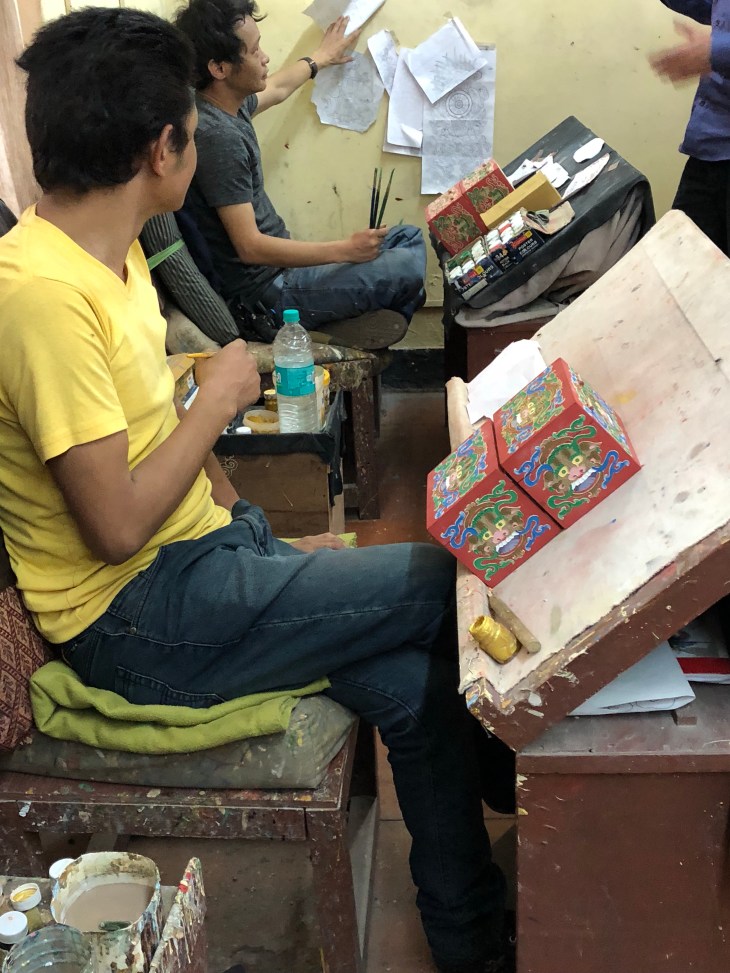
In other places we saw box painting, jig-saw carving, wood carving, sewing, and elaborate painting on stretched canvases. The artisans worked in near silence although a couple were peering down at their mobile phones from time to time.
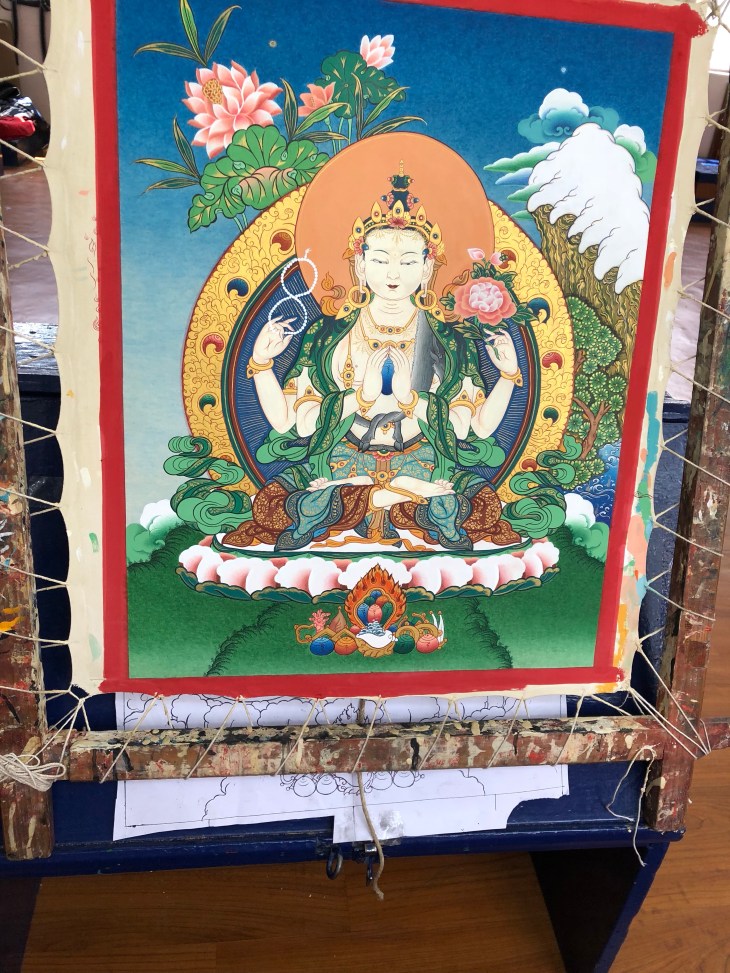
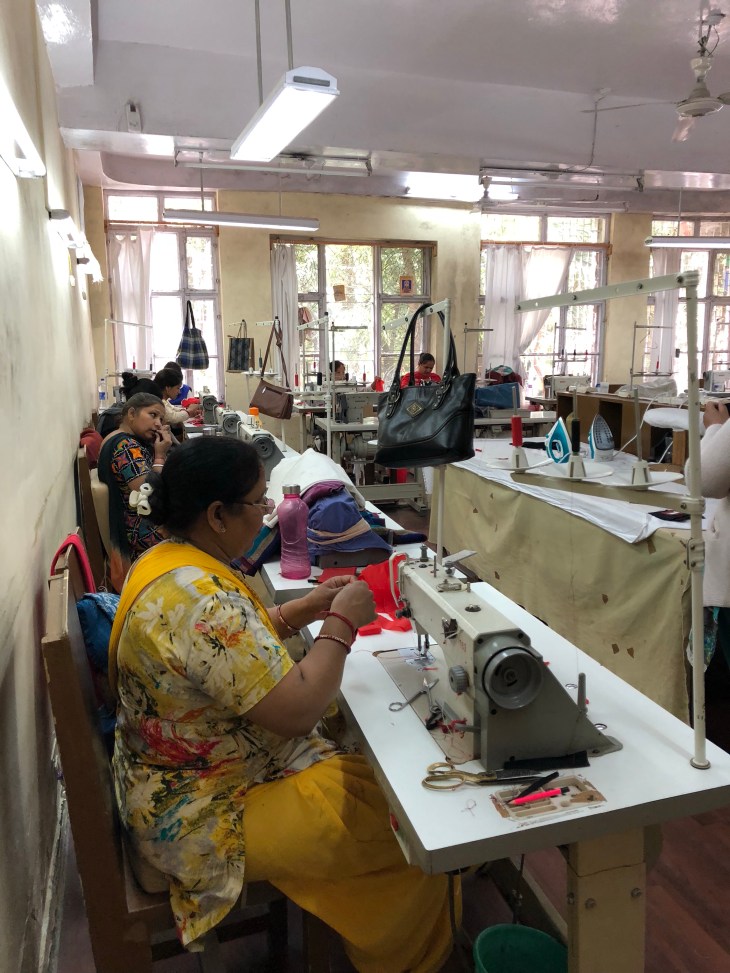
Having soaked up this small sample of ancient Tibetan culture we had a snack in the garden cafe, before resuming our route.
We were aiming for The Lodge at Wah, which is a homestay on the Wah Tea Estate.
There was clearly some sort of meteorological tantrum occurring in the heavens, as the green grey cloud persisted, and after arrival we were hailed upon followed by more thunderous and torrential rain.
The Wah Estate nestles in woodland outside Palampur, under the shadow of the Dhauladhar Himalaya.

Its five hundred acres are devoted to growing speciality tea, as naturally as possible, producing about 150 tons a year. Only a quarter of what is harvested eventually becomes tea. All the tea is hand picked and dried according to the type of tea they are trying to produce. Green tea is made by stopping the oxidisation as quickly as possible after harvesting before moisture is removed, and black tea is left for longer. Moisture removal entails air being blown across it by enormous fans in a kind of wind tunnel. The following morning, our young host gave us a Tea Estate tour explaining the many stages passed through before the tea leaf and bud are transformed into good quality loose leaf tea. There are four gradings: the lowest, almost like dust, being eventually thrown back under the bushes as mulch.
Tea bushes can yield up to three flushes a year. The two types of bush we were shown were camellia assamica and camellia cinensis. This estate does not grow assamic tea, (strong flavoured) as the conditions are not suitable, but the camellia cinensis (China) variety instead, which produces finer quality ‘liquor tea’. The cinensis bushes have multiple stems and respond well to being cut back vigorously, although they do go through dormant phases and need to be ‘rested’. They are smaller plants than the assamicas which can grow up to 15ft and are essentially trees rather than bushes!
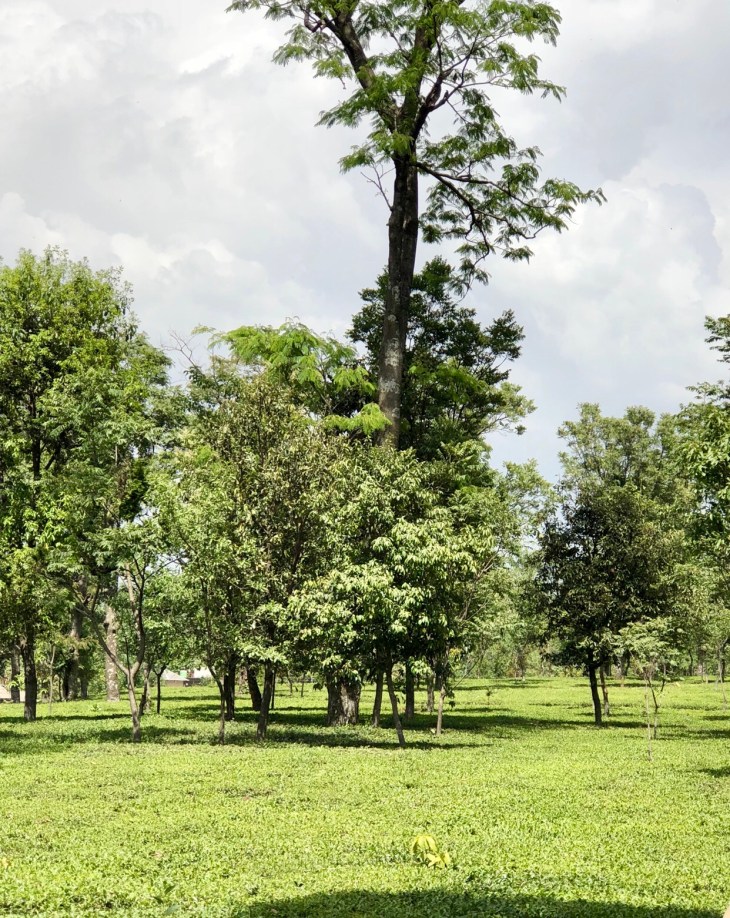
As you stroll through the plantation, the bushes sit low like a thick green carpet; densely packed with barely space to get between them.

Being a family run and privately owned estate the focus is very much on keeping pesticide free with careful husbandry of the plants in order to produce top quality tea. But like all farmers, they remain at the mercy of the weather and their tea pickers who must be trusted not to hurriedly pluck stalks as well as the bud and top leaves!
We were treated to a tea tasting. You take a sip, (we were given spoons although they generally sip straight from the cup so that metal does not affect the taste), and then suck in air over the top of it in a slurp, before spitting it out again. I got the hang of it but found that whilst I received the top notes of the tea nicely through my nose, a bitter taste was left on my tongue. Perhaps I need further instruction! 
Leaf drying

Tea rollers

Loading the tea rollers
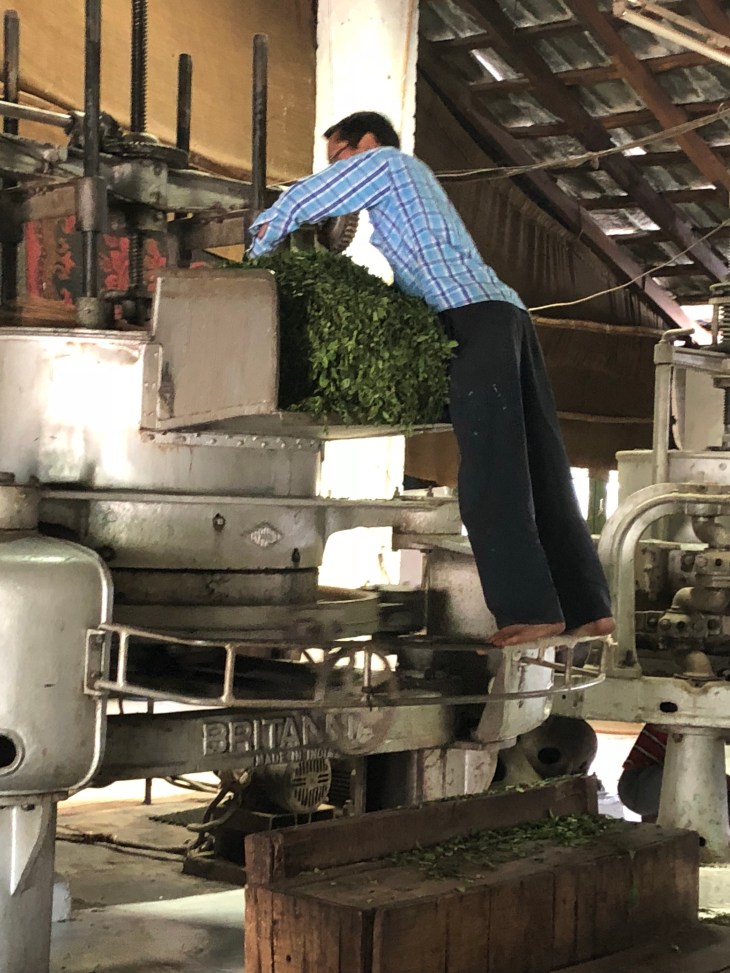
Extremely noisy machines for sorting leaves.

A final sort before packaging

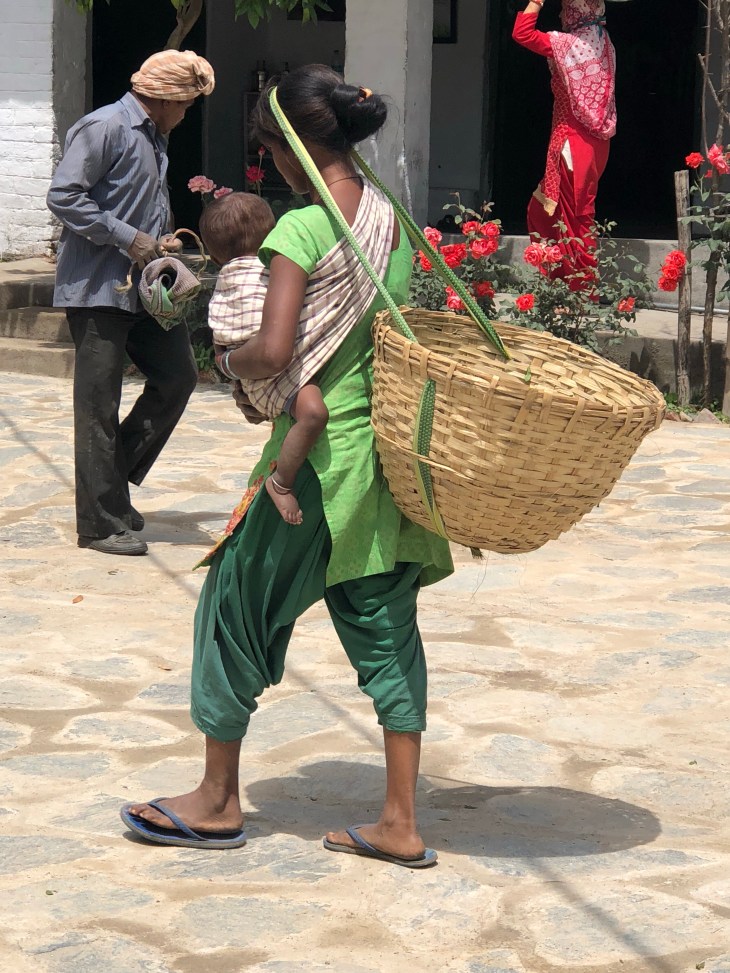
The plucking is predominantly undertaken by women. They have to pick 12kgs for their minimum wage and thereafter can earn more for any extra weight plucked. It’s hard work to pick that amount, and the women often have little ones in tow.
** ** ** ** **
In the afternoon we had great fun catching the narrow gauge toy train on the Kangra Valley Railway. We picked our way along the railway line itself in order to get to the tiny station. You could hear the train blowing its horn long before it arrived. Here’s J holding up everything.
.
We boarded at Patti Rajpura with Maneesh for company. It was terribly simple and refreshing. The train clunked rhythmically over the rails: dugga dung, dugga dung, etc! in a lulling sort of way. We peered out on either side at the lush vegetation rolling past, the train slowing down worryingly as we crossed a very old bridge.. As ever, you could lean out of the windows and the carriage door was open if you wanted to lean out of that too, which naturally Jeremy did. Lots of train footage was taken!
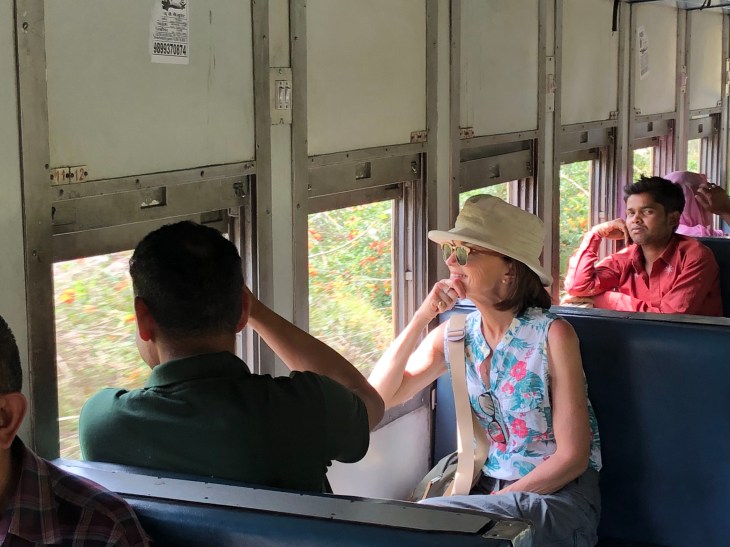

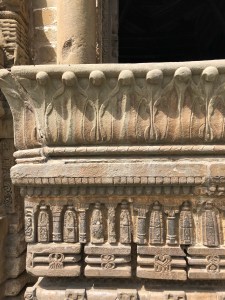
About forty minutes later we got out at Baijanath Prapol. More engine photos were snapped and we were then ferried to the ancient Baijanath Temple – circa 8th Century. Miraculously, it had survived perfectly despite the great earthquake of 1905.


The ancient carvings had weathered extraordinarily well I thought.
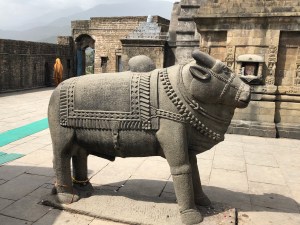
There was a lot of devotional touching of the stone bull. Incense was burning at its feet. Everyone wanted their photograph taken next to it, but managed to snap this in between!
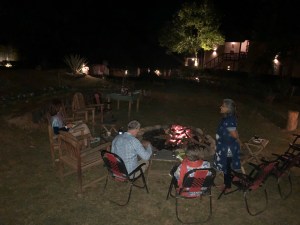
We returned to the Lodge by road. Feeling rather hot and dusty it was good to shower off and kick back for a few minutes. Later on a fire was lit in the garden and we had supper outside. It was wonderful to stare into the flames and reflect, before turning wearily in.
*** *** ***
Sunday 22nd April
……dawned brightly. We had our breakfast outside.
A delightfully slow morning ensued whilst I caught up on the blog (!)
At around 12.20 we bundled into the car and were taken to a ‘puja’ for all the tea estate laid on by our hosts, the estate owners, Neerja and Deepak.
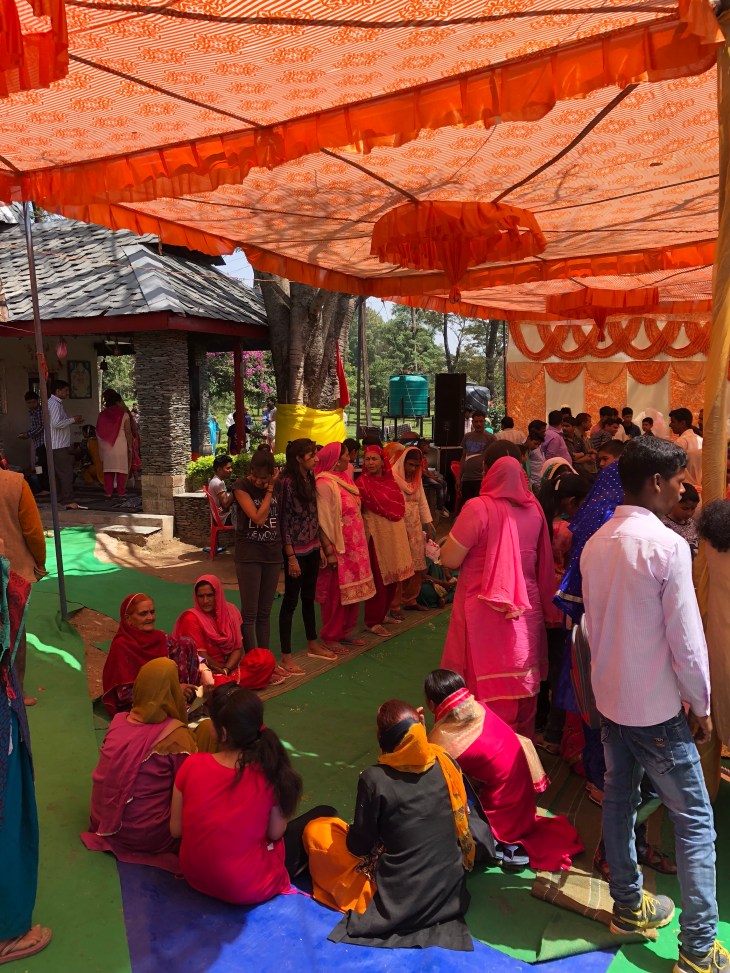
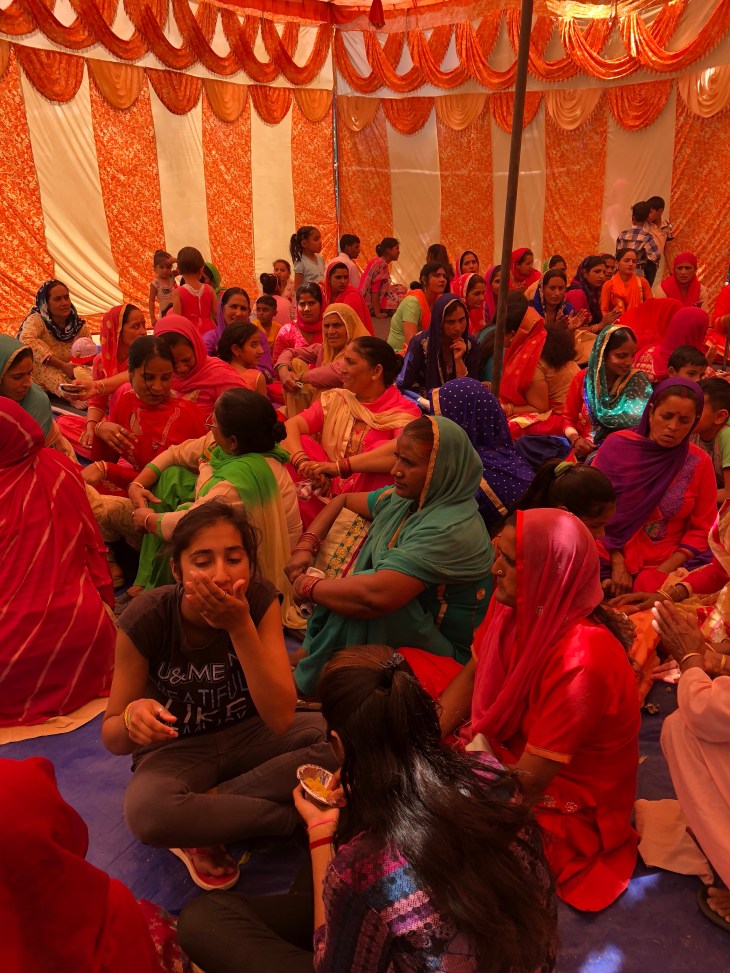
We had no idea what to expect but the puja was a giant thanksgiving/devotional meal laid on for all the village and tea workers who were treated to lunch and dancing. It was a visually stunning occasion: a riot of reds, golds, pinks and blues in the saris set against the bright greens of the tea bushes and the blue of a cloudless sky. With our new fellow guests, Jill and John we were completely agog!
Our hosts Deepak, Neerja, their son Surya and his wife Upasana

And here were a couple of mischiefs I met as we were leaving.
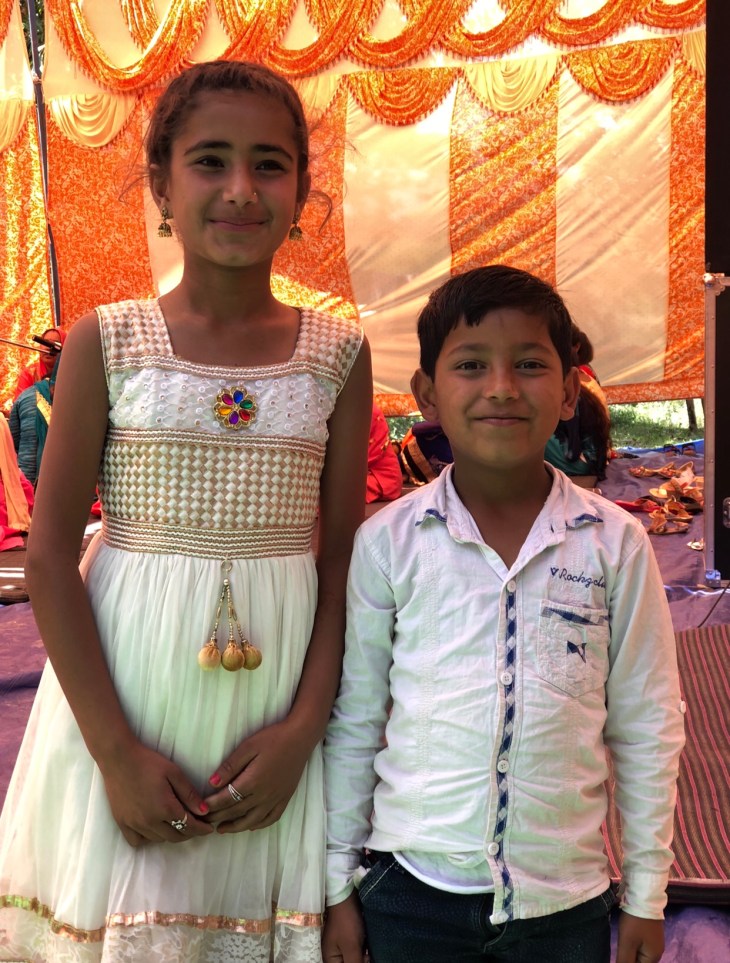
We felt very privileged to have been part of the occasion.

 Stoke Tours