
Jeremy has been doing some more ‘fathoming’ and research, so here is his second guest blog!
BUDDHISM AND JAINISM
I have included these 2 religions in the one blog, as they could both be said to be reform movements against the Vedic/Brahministic versions that represented Hinduism at a similar time – around BC 600 – 500
Buddhism in India
Founder : Buddha – ‘The enlightened one’
Siddarta Gautama was born around BC 563 into a high class/warrior family (and therefore brought up with Hindu/Vedic traditions) in Lumbini, Northern India – a village now located just inside Nepal. He led a pampered life until his early 20s when he started meeting people outside his own environment. Unable to understand why they were so different – poor, not good health etc he left his family and went to meditate under a bodhi tree in Bodh Gaya for 45 days. Nothing distracted him as, by the end of that time, he had reached a state of enlightenment or ‘Moksha’ (see earlier Blog).
He rejected key elements of Hinduism:
• the Vedic gods and scriptures
• the caste system and
• no eternal soul
However, he accepted other key principles:
• the cyclical nature of life – ie rebirth
• ‘karma’ – the impact of actions in previous lives
As he was developing his thinking, he gathered round him 5 disciples and preached ‘4 Noble Truths’ and ‘The Eightfold Path’.
The 4 Noble Truths were:
• life is painful
• suffering is caused by ignorance and desire
• beyond suffering, there is another state – nirvana
• nirvana can be reached by following the ‘Eightfold Path’
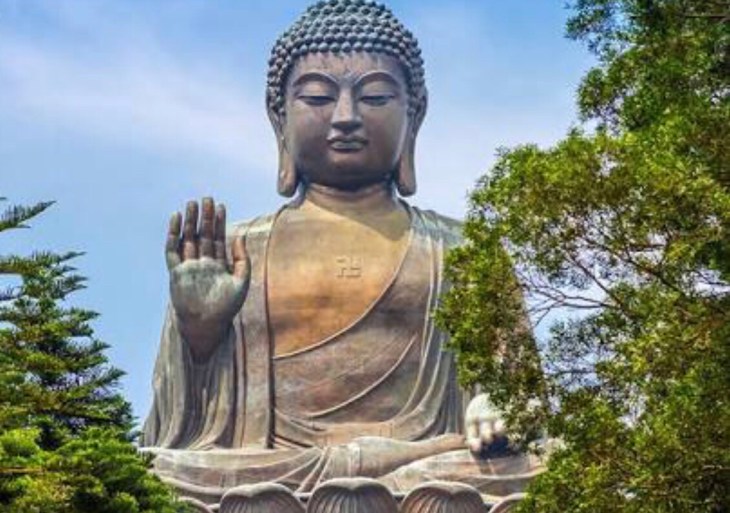
Nirvana has been described variously as supreme bliss, unshakeable serenity, unrestricted spirit freedom
The ‘Eightfold Path’ consists of each individual choosing and following the right:
• aspiration
• knowledge
• speech
• behaviour
• livelihood
• efforts
• mindfullness and
• concentration
The essential elements in following the eightfold path are the perfection of wisdom, morality and meditation.
None of the Buddha’s teachings were written down for another 300 years, but were passed on orally. Initially, there were two schools of followers – Mayanana (The Great Way) and the Hinayana (The Lesser Way). However, Buddhism has now developed over the centuries into a number of schools in different countries.
Mahayana followers (The Great Way) believe in salvation for all. They practise a more devotional form of meditation and chanting. New figures (additional to Buddha) play a prominent part in their beliefs and worship. These are ‘bodhisattvas’, saints who have been predestined to reach a state of enlightenment through thousands of rebirths.
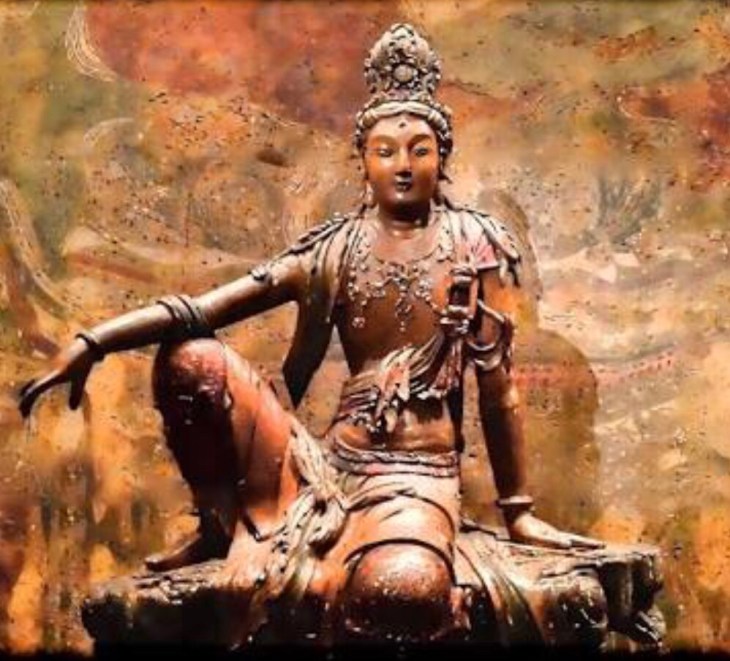
Schools that have developed from Mayahana include Theravada, Vajrayana (sometimes known as Tantric Buddhism) and Zen (developed in Japan).
Tibetan Buddhism has developed into 4 schools – Gelug (the current Dalai Lama is from this school), Nyingma (sometimes known as Bon), Kagyu and Sakya. The Chinese authorities have persecuted Buddhists in Tibet since the early 1950’s. In 1959, the current leader – His Holiness The 14th Dalai Lama – moved into exile to McLeodganj, Dharamshala, in Northern India.
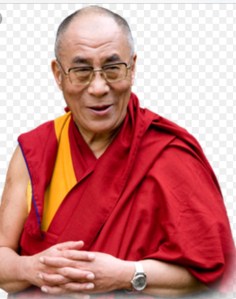
Here, a very large Tibetan community has grown up over the last 50 years. It also has attracted a number of Western followers, many of whom make pilgrimage visits to Dharamshala and Northern India. A Buddhist teacher maybe known as a ‘Lama’ or ‘Rinpoche’.
Theravada followers are mainly found in Sri Lanka and South East Asia – Thailand, Myanmar, Cambodia, Malaysia, etc and gaining devotees in the West.
Surprisingly, it is estimated that there are over 200 million Buddhists in China (despite the Chinese authorities) out of approx 500 million worldwide. (The reasons for this are outside the scope of this blog)

Buddhism in India over the last 1000 years seems to have lost out to a resurgence of Hinduism and the savage slaughter of most Buddhist priests in India by the incoming Muslim/Mughal conquerors of the 12th century AD. Despite Buddhism developing out of the Hinduism/Vedic tradition, it is estimated there are only around 10 million Buddhists in India today.
Jainism

Like Buddhism, Jainism began as a reform movement against the Vedic/ Brahmanistic form of Hinduism practised around the 6th century BC and in the same border region of India and Nepal as Buddha was born. It appears never to have spread beyond the borders of India and has only around 4 – 5 million followers today.
Jain is from the sanskrit word ‘jina’ – descendants of conquerors. Jainism principles developed from 24 ‘tirthankaras’ (prophets), the last of whom (Mahavir) is credited with its foundation. He was born into noble birth (and therefore the existing Vedic/Brahmanistic traditions) but renounced it all at aged 30 and then led a life of austerity as an ascetic. The 24 tirthankaras demonstrated that through a life of austerity, it is possible to conquer the mind, passions and body to attain deliverance from the endless cycle of rebirth.
Jains accept the Hindhu ‘karma’ and the concept of God, but not as the creator of the universe, but as demonstrated within the lives and examples of the 24.
Jains believe in 2 principles – the living and the non-living. All life is sacred and all living entities , even the smallest insects, have within them an indestructible and immortal soul. They developed the notion of ‘Ahimsa’ – non-harming and non-violence
They take 5 vows:
• not to harm any living being
• to speak the truth
• not to steal
• to give up all sexual relationships (not sure how the sect continues over the centuries!!) and
• to give upon all possessions (for some even clothes – see below)
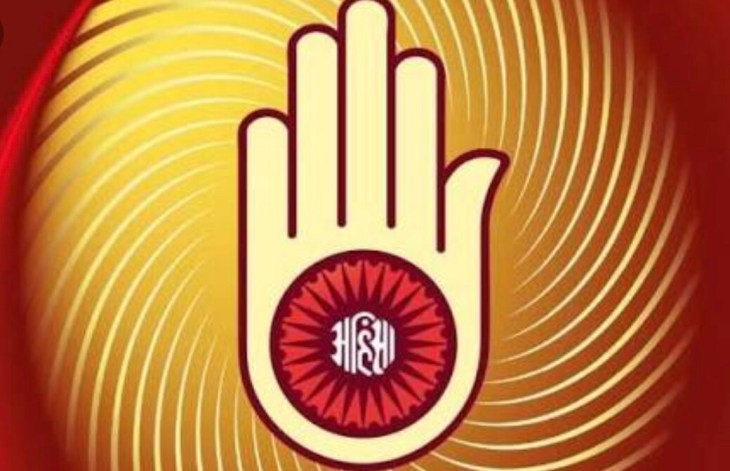
The first vow means they are very strict vegetarians – do not eat anything that runs, swims or flies! Many do not eat root vegetables as they believe that destroys the plant. It also means that strict Jains carry a peacock feather with them to brush clear any insects on a chair before they sit down! The most strict, employ someone with a peacock feather to clear the path of insects in front of them whilst they are walking!
Jains believe that salvation is achieved through one’s own efforts – no guru or divinity can help you achieve this. Also your manner of dying is important – many fast themselves to death (Sallekhana) – when they feel they have completed all their obligations in this life.

As they believed in no harm to any living being, they barred themselves from the 2 principal occupations at that time – warriors and farming. So they became commercial traders and bankers. It seems to me that this presents itself as a considerable dichotomy – most Jains are rich! ie they haven’t given up all their possessions and their temples are some of the richest in India! It is said they currently control most of India’s diamond and precious stone trade!
Finally, there are 2 sects:
Svetambaras – ‘white clad’ –

mainly in east and west India and Digambaras – ‘sky clad’ – who often go naked and are mainly in the South (perhaps because its warmer all the year round?!)
Although the Jain community is small, it has left a deep impression on Indian society as it can be seen to have similar beliefs in common with puritanical forms of Hinduism. Vegetarianism, reverence for life, and non- violence are all seen by Hindus as highly commendable.
JMS
Written at the Mary Budden Estate, India – 12th April 2018
 Stoke Tours